
Indoor cats live longer, safer lives.
But indoor life can also bring hidden stress.
Without the ability to roam, hunt, climb trees, and patrol territory, many cats experience frustration, boredom, and anxiety which often shows up as scratching, zoomies at 3am, overgrooming, or sudden aggression.
The good news?
Creating a calm, enriching, stress-free indoor environment is completely achievable — and it doesn’t require a full house makeover.
Let’s break it down.
Why Indoor Cats Get Stressed
Cats are:
- Territorial
- Routine-driven
- Natural hunters
- Highly sensitive to change
When their environment lacks stimulation or predictability, stress levels rise.
Common signs of indoor stress include:
- Hiding more than usual
- Overgrooming
- Knocking things over
- Sudden litter box issues
- Increased nighttime activity
- Irritability
Stress isn’t “bad behaviour.”
It’s communication.
1️⃣ Add Vertical Territory (This Is Critical)
Cats don’t just use floor space — they use air space.
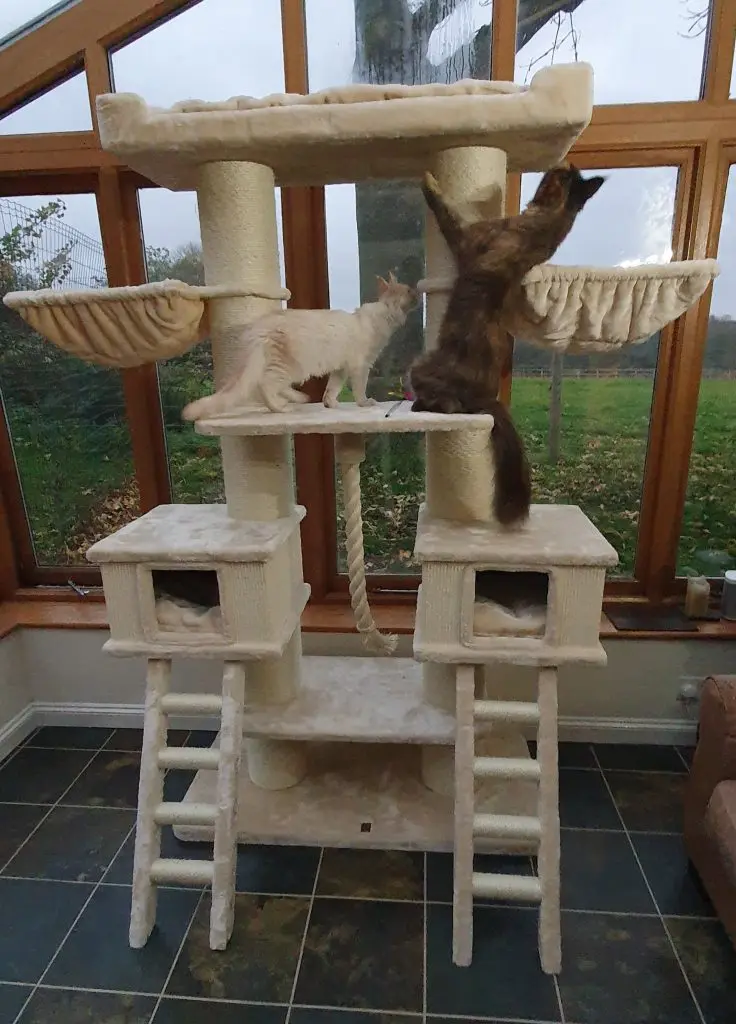
In multi-cat or small homes especially, lack of vertical territory is a major stress trigger.
Vertical space provides:
- Security
- Observation points
- Escape routes
- Territory expansion
Easy Ways to Add Height:
- Tall cat trees (at least 5–6 feet)
- Wall shelves designed for cats
- Window perches
- Top access to wardrobes (safe and stable)
A cat that can climb feels more in control.
Control reduces stress.

2️⃣ Create Safe Retreat Zones
Every cat needs a place where nothing happens unless they choose it.
A proper retreat space should be:
- Quiet
- Elevated or enclosed
- Away from foot traffic
- Not near litter boxes or loud appliances
Examples:
- Covered cat beds
- Soft crate-style dens
- High shelves with blankets
- Spare room corners
If your cat hides under beds often, they may not have a true safe space.
Give them one intentionally.
3️⃣ Make Hunting a Daily Ritual
Indoor cats don’t hunt prey — but their brains still expect to.
Without hunting outlets, frustration builds.
Instead of free-feeding alone, try:
- Puzzle feeders
- Treat-dispensing toys
- 10–15 minute wand toy sessions twice daily
- Scatter feeding occasionally
The key sequence is:
Hunt → Catch → Eat → Groom → Sleep
When this natural rhythm is supported, stress drops dramatically.


4️⃣ Protect Their Routine
Cats thrive on predictability.
Sudden changes can cause anxiety spikes.
Try to keep consistent:
- Feeding times
- Play sessions
- Bedtime routines
- Litter box cleaning schedule
If change is unavoidable (visitors, travel, furniture moving), increase enrichment temporarily to balance the disruption.
5️⃣ Optimise the Litter Box Setup
One of the biggest hidden stress triggers indoors is poor litter box management.
Follow the golden rule:
One litter box per cat, plus one extra.
And make sure:
- Boxes are in quiet locations
- They’re cleaned daily
- The litter type isn’t changed suddenly
- They aren’t placed near food bowls
Litter box stress often shows up as behaviour problems elsewhere.


6️⃣ Reduce Sensory Overload
Cats have extremely sensitive hearing and smell.
Indoor stress can come from:
- Loud TV volume
- Constant vacuuming
- Strong cleaning products
- Essential oil diffusers (many are unsafe for cats)
- Frequent rearranging of furniture
A calm environment is not silent — but it is stable.
7️⃣ Provide Scratching Options (In the Right Places)
Scratching isn’t destruction.
It’s:
- Stress relief
- Muscle stretching
- Territory marking
Place scratching posts:
- Near sleeping areas
- Close to previously scratched furniture
- In social zones (cats mark shared territory)
Tall, sturdy posts work best.
If your cat scratches the sofa, they may be trying to mark shared space — not misbehave.
8️⃣ Manage Multi-Cat Dynamics Carefully
If you have more than one cat, stress often comes from subtle social tension.
Watch for:
- Blocking access to food or litter
- One cat always claiming high spaces
- Staring contests
- Sudden play escalating to aggression
Solutions include:
- Multiple feeding stations
- Duplicate high perches
- Separate rest areas
- Individual play sessions
More resources = less competition.


9️⃣ Increase Mental Enrichment
Indoor cats need more than toys.
Rotate enrichment weekly:
- Cardboard boxes
- Paper bags (handles removed)
- Cat-safe plants (like cat grass)
- New climbing routes
- Window viewing spots
Even moving furniture slightly can create a “new territory” experience.
Novelty reduces boredom.
1️⃣0️⃣ Watch for Subtle Stress Signals
Before behaviour escalates, cats often show small clues:
- Tail flicking
- Ears slightly back
- Dilated pupils
- Avoiding eye contact
- Sleeping more than usual
When you notice early signs, increase play and provide extra retreat time.
Prevention is easier than correction.
The 4 Foundations of a Stress-Free Indoor Cat
If you focus on just four things, make it these:
- Vertical space
- Daily hunting-style play
- Predictable routine
- Safe retreat areas
When these are met, most indoor stress behaviours improve naturally.
Final Thoughts
A stress-free indoor environment isn’t about perfection.
It’s about understanding what your cat’s instincts still need — even within four walls.
When your cat feels:
- Safe
- Stimulated
- In control
- Secure in their territory
You’ll see more:
- Relaxed body language
- Affection
- Better sleep patterns
- Fewer “problem” behaviours
Indoor life can be incredibly fulfilling for cats.
It just needs to be built with them in mind.
I